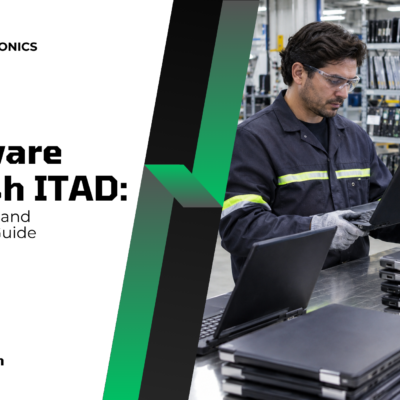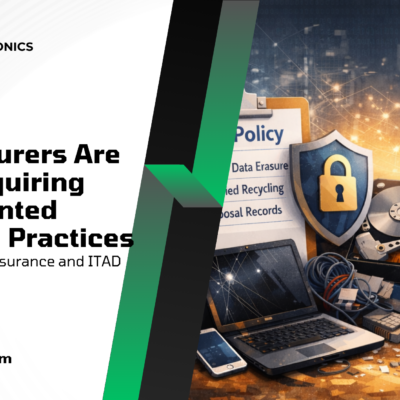


IT asset disposition (ITAD) used to be an afterthought, the last step in a hardware lifecycle that few executives paid attention to. That has changed. Accelerated refresh cycles, the growing use of solid-state storage, updated federal sanitization guidance, and rising expectations around sustainability reporting have moved ITAD into the conversations of IT Directors, CIOs, Compliance Officers, and business owners. For organizations that handle sensitive data, how retired equipment is sanitized, documented, and recycled now carries real operational, regulatory, and reputational consequences.
This article looks at the ITAD trends shaping data destruction and electronics recycling today, what they mean for your organization, and how to build a disposition program that is practical, auditable, and defensible.
Trend 1: Large-Scale Hardware Refresh Cycles Are Increasing Disposition Volume
Several forces are driving organizations to retire equipment in larger batches than usual. Microsoft ended support for Windows 10 in October 2025, as noted on its Windows end of support page, and many older devices do not meet Windows 11 hardware requirements. At the same time, organizations investing in AI workloads are upgrading servers, GPUs, and high-performance storage in their data centers.
Why volume creates risk
When hundreds or thousands of devices leave an organization in a short window, the chance of a laptop, drive, or server slipping through the cracks goes up. Common gaps include:
- Incomplete asset inventories that do not match what is physically shipped
- Devices stored in closets or remote offices for months before pickup
- Inconsistent handling between headquarters and branch locations
- Missing serial-number-level documentation at the end of the process
A refresh project is the right time to review your ITAD process, not just your procurement plan. Coordinating pickup schedules, reconciling asset lists, and confirming documentation requirements in advance reduces exposure significantly.
Trend 2: NIST SP 800-88 Rev 2 Puts Emphasis on Sanitization Programs
The National Institute of Standards and Technology published NIST SP 800-88 Revision 2, Guidelines for Media Sanitization, updating the widely referenced Rev 1 guidance. NIST SP 800-88 remains the most commonly cited framework for media sanitization in the United States, and many auditors, contracts, and internal policies point to it directly.
What IT and compliance leaders should know
Rev 2 places stronger emphasis on establishing and maintaining an organizational media sanitization program, rather than treating sanitization as a single technical step. It retains the familiar sanitization outcomes of Clear, Purge, and Destroy, and it points practitioners toward current industry standards for specific technique guidance. For decision-makers, the practical takeaways are:
- Policy matters: Your organization should have a documented sanitization policy that defines roles, methods by media type, and verification steps.
- Verification matters: Sanitization should be validated and recorded, not simply assumed.
- Vendor alignment matters: Your ITAD partner’s processes should map clearly to the guidance your policies reference.
If your internal policies or vendor contracts still reference only Rev 1, this is a good time to review and update the language with your legal and compliance teams.
Trend 3: SSDs and Modern Storage Require Purpose-Built Erasure
Traditional hard disk drives store data on magnetic platters, and overwriting techniques for HDDs are well understood. Solid-state drives, NVMe devices, and self-encrypting drives work differently. Features such as wear leveling and over-provisioning mean that some storage areas may not be reachable through simple overwrite methods applied at the operating system level.
How organizations are responding
Rather than relying on generic wiping tools or formatting, organizations are turning to professional erasure software that can identify the drive type and apply appropriate sanitization commands supported by the device. At IER ITAD Electronics Recyclers, data erasure is performed using Ziperase, with processes aligned with NIST SP 800-88 Rev 2. Drives are securely overwritten using methods appropriate to the media, and results are documented in erasure reports tied to device serial numbers.
When erasure is not suitable, for example with failed drives or media that cannot be verified, physical destruction is the appropriate path. In those cases, media is certified for destruction and documented accordingly.
Trend 4: Certification and Downstream Accountability Are Under Scrutiny
Buyers of ITAD services are asking harder questions about what happens to equipment after it leaves their facility. A vendor’s certification status is one of the clearest signals of how it manages data security, environmental responsibility, and downstream partners.
The role of R2v3
IER ITAD Electronics Recyclers is R2v3 certified. The R2v3 standard, maintained by SERI (Sustainable Electronics Recycling International), addresses areas that matter to IT and compliance leaders, including:
- Data sanitization requirements and verification
- Environmental, health, and safety management
- Responsible handling of equipment and components of concern
- Downstream vendor due diligence and tracking
- Prioritizing reuse and recovery where appropriate
Certification does not remove your organization’s own responsibilities, but working with a certified provider gives you a documented, independently audited framework to reference during internal reviews and external audits.
Trend 5: Documentation and Chain of Custody Are Becoming Audit Essentials
Regulators, auditors, and cyber insurance carriers increasingly expect organizations to demonstrate how retired assets were handled. Depending on your industry, regulations such as HIPAA, GLBA, state privacy laws, and contractual data protection obligations may require you to show that data on retired equipment was appropriately sanitized.
What strong documentation looks like
An auditable disposition record typically includes:
- An itemized asset list with serial numbers and asset tags
- Chain-of-custody records from pickup through final processing
- Erasure reports showing method, result, and date for each device
- Certificates of data destruction for physically destroyed media
- Recycling and disposition records indicating final outcomes
These records help your organization respond to audits, internal investigations, and customer security questionnaires with evidence rather than assumptions.
Trend 6: Sustainability and ESG Reporting Are Shaping ITAD Decisions
Electronic waste is one of the fastest-growing waste streams, and the U.S. Environmental Protection Agency encourages reuse and responsible recycling of electronics to conserve resources and keep hazardous materials out of landfills. For many organizations, ITAD now supports environmental, social, and governance (ESG) goals in addition to data security.
Reuse versus recycling
When devices are properly sanitized and functional, reuse can extend product life and may provide value recovery that offsets disposition costs. Equipment that cannot be reused should be recycled responsibly so that materials such as metals, plastics, and circuit boards are recovered. Reporting on recycled weights and reuse outcomes can support sustainability disclosures, provided the data is accurate and documented.
Best Practices for a Modern ITAD Program
Use the following steps to strengthen your disposition process and align it with current expectations:
- Maintain an accurate asset inventory. Track devices from procurement through retirement so that every asset can be reconciled at disposition.
- Adopt a written media sanitization policy. Reference NIST SP 800-88 Rev 2 and define approved methods by media type, including HDDs, SSDs, mobile devices, and network equipment.
- Select a certified ITAD partner. Confirm current certifications, such as R2v3, and request documentation of sanitization tools and procedures.
- Secure assets before pickup. Store retired devices in locked, access-controlled areas and minimize the time they sit idle.
- Require serial-level reporting. Ask for erasure reports and certificates of destruction that tie back to individual assets.
- Plan for remote and distributed devices. Establish a defined process for retrieving equipment from remote employees and branch offices.
- Review downstream handling. Ask how your vendor vets and monitors downstream recyclers and processors.
- Retain records according to policy. Store disposition documentation for the period required by your regulatory and contractual obligations.
- Review the program periodically. Update policies and vendor requirements as standards, technologies, and regulations change.
Frequently Asked Questions
What is the difference between data erasure and physical destruction?
Data erasure uses software to sanitize storage media so data is securely overwritten, allowing the device to be reused or resold. Physical destruction, such as shredding, renders the media unusable. The right choice depends on the media type, its condition, your policies, and your organization’s risk tolerance. Both should be documented.
Is formatting or factory resetting a drive enough?
Generally, no. Formatting and basic resets may leave data accessible with readily available tools, particularly on SSDs. NIST SP 800-88 Rev 2 provides guidance on appropriate sanitization outcomes, and professional erasure tools are designed to apply methods suited to each media type and verify the result.
What does R2v3 certification mean for my organization?
R2v3 is an independently audited standard from SERI covering data security, environmental and safety practices, and downstream accountability for electronics recyclers. Working with an R2v3 certified provider such as IER gives your organization a recognized framework to reference, though you remain responsible for your own policies and record keeping.
What documentation should I receive from my ITAD provider?
At minimum, expect an itemized asset list, chain-of-custody records, erasure reports for sanitized devices, and certificates of data destruction for physically destroyed media. These records support audit readiness and internal reporting.
How does ITAD support sustainability goals?
Responsible ITAD prioritizes reuse of functional equipment and recycling of materials that cannot be reused. This reduces the volume of electronics sent to landfills and can provide data for sustainability reporting when outcomes are documented accurately.
Conclusion
The ITAD landscape is changing quickly. Hardware refresh cycles are increasing disposition volumes, NIST SP 800-88 Rev 2 has updated the guidance many organizations rely on, modern storage requires purpose-built sanitization, and auditors and stakeholders expect clear documentation and responsible recycling. Organizations that treat ITAD as a structured, policy-driven program, supported by a certified partner and auditable records, are better positioned to manage risk and meet their compliance and sustainability objectives.
IER ITAD Electronics Recyclers is R2v3 certified and performs data erasure using Ziperase, with processes aligned with NIST SP 800-88 Rev 2. Our team works with IT and compliance leaders to plan disposition projects, securely overwrite or certify media for destruction, and deliver the documentation your organization needs.
Ready to strengthen your IT asset disposition program? Contact IER ITAD Electronics Recyclers today to discuss your upcoming refresh, data destruction requirements, or electronics recycling needs.